Nyári kisokos gazdiknak
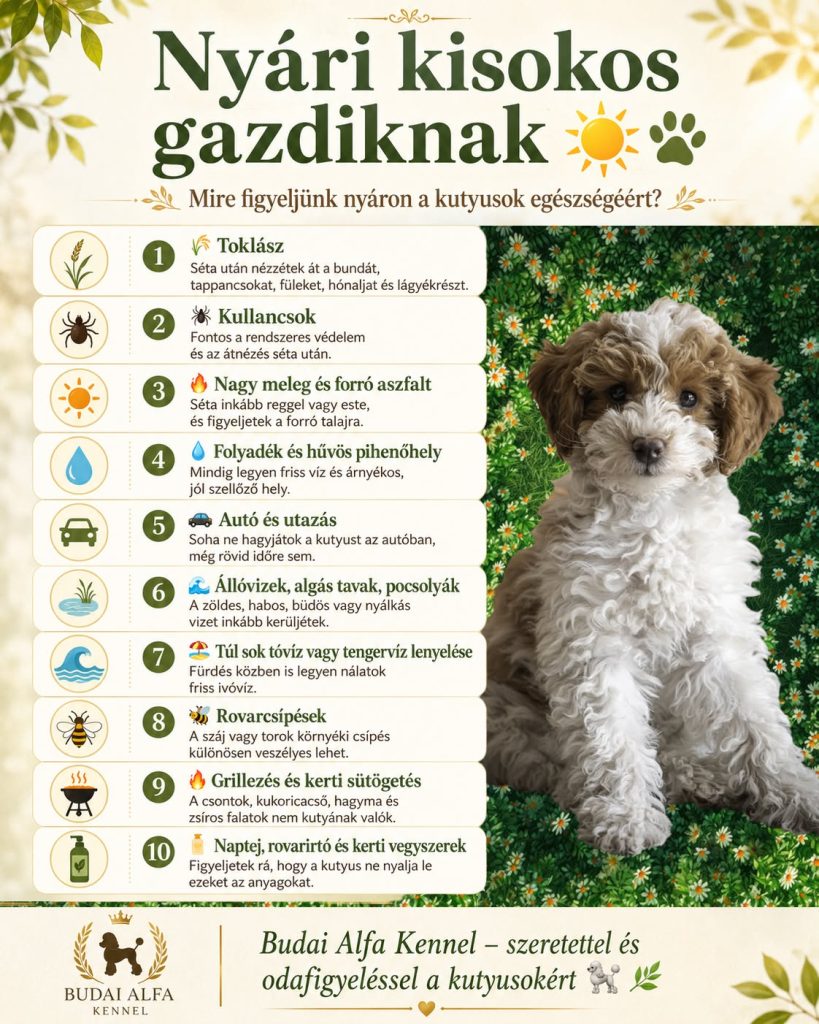
A nyár tele van sétákkal, kirándulásokkal és sok szabadban töltött élménnyel, de ilyenkor néhány dologra különösen érdemes odafigyelni a kutyusok egészsége érdekében. Toklász Séta után mindig nézzétek át a kutyus bundáját, tappancsait, füleit, hónalját és lágyékrészét. A toklász könnyen befúródhat a bőr alá, fülbe vagy mancsba, és komoly gyulladást okozhat. Kullancsok Nyáron különösen fontos a rendszeres kullancsvédelem. Séta után érdemes átnézni a kutyust, főleg a fülek, nyak, has és lábak környékén. Nagy meleg és forró aszfalt A déli órákban kerüljétek a hosszú sétákat. Inkább kora reggel vagy késő este induljatok útnak. Ha a kezünknek túl meleg az aszfalt, a kutyus mancsának is az, ilyenkor válasszatok árnyékos, füves útvonalat. Folyadék és hűvös pihenőhely Mindig legyen nálatok friss víz, főleg hosszabb séta, utazás vagy program esetén. Otthon és útközben is fontos, hogy legyen árnyékos, jól szellőző hely, ahol a kutyus pihenni tud. Autó és utazás Kutyust soha nem hagyunk autóban egyedül, még rövid időre sem. Arra is figyeljetek, hogy a forró ülés, csomagtér, fém ketrec vagy műanyag box nagyon gyorsan átmelegedhet. Állóvizek, algás tavak, pocsolyák Nyáron a tavakban, pocsolyákban és lassú folyású vizekben megjelenhetnek olyan algák, amelyek veszélyesek lehetnek a kutyusokra. Ha a víz zöldes, habos, büdös vagy nyálkás felszínű, inkább kerüljétek el, és fürdés után érdemes leöblíteni a kutyust tiszta vízzel. Túl sok tóvíz vagy tengervíz lenyelése Játék és fürdés közben sok kutyus akaratlanul is iszik a vízből. A túl sok tóvíz vagy sós víz gyomorpanaszokat okozhat, ezért mindig legyen nálatok friss ivóvíz. Rovarcsípések A méh- és darázscsípés különösen akkor lehet veszélyes, ha a kutyust a szája, nyelve vagy torka környékén éri. Ilyenkor a duzzanat miatt érdemes azonnal állatorvossal egyeztetni. Grillezés és kerti sütögetés A csontok, kukoricacső, hagyma, fokhagyma, saslikpálca és zsíros falatok nem kutyának valók. Bármilyen csábítóan néz is, a maradék nem mindig biztonságos jutalomfalat. Naptej, rovarirtó és kerti vegyszerek A gazdiknak készült naptej, szúnyogriasztó vagy kerti permetezőszer nem biztos, hogy biztonságos a kutyusoknak. Figyeljetek rá, hogy ne nyalják le magukról, a gazdiról vagy a fűről ezeket az anyagokat. Nálunk a Budai Alfa Kennelben mindig nagy figyelmet fordítunk arra, hogy a kutyusaink biztonságban, egészségesen és komfortosan élvezzék a nyári napokat is. ENG below: Summer Guide for Dog Owners ☀️🐾 Summer is full of walks, trips, and wonderful outdoor moments, but during this season there are a few things worth paying extra attention to in order to keep our dogs healthy and safe. 🤍 🌾 FoxtailsAfter every walk, always check your dog’s coat, paws, ears, armpits, and groin area. Foxtails can easily work their way under the skin, into the ears, or between the paws, and may cause serious inflammation. 🕷️ TicksRegular tick protection is especially important during the summer. After walks, it is always a good idea to check your dog carefully, especially around the ears, neck, belly, and legs. 🔥 Heat and hot asphaltAvoid long walks during the hottest midday hours. It is better to go out early in the morning or later in the evening. If the asphalt feels too hot for your hand, it is too hot for your dog’s paws as well. In this case, choose a shady, grassy route instead. 💧 Water and a cool resting placeAlways have fresh water with you, especially during longer walks, trips, or outdoor programs. At home and on the go, it is also important to provide a shady, well-ventilated place where your dog can rest comfortably. 🚗 Cars and travellingNever leave your dog alone in the car, not even for a short time. Also keep in mind that hot seats, the trunk, metal crates, or plastic carriers can heat up very quickly. 🌊 Still waters, algae-filled lakes, and puddlesIn summer, lakes, puddles, and slow-moving waters may contain algae that can be dangerous for dogs. If the water looks greenish, foamy, smelly, or has a slimy surface, it is better to avoid it. After swimming, it is also a good idea to rinse your dog with clean water. 🏖️ Swallowing too much lake or sea waterWhile playing and swimming, many dogs accidentally drink from the water. Too much lake water or salt water can cause stomach problems, so always make sure you have fresh drinking water with you. 🐝 Insect stingsBee and wasp stings can be especially dangerous if your dog is stung around the mouth, tongue, or throat. Because swelling can occur, it is best to contact a veterinarian immediately in such cases. 🔥 Barbecues and garden cookoutsBones, corn cobs, onions, garlic, skewers, and fatty leftovers are not suitable for dogs. No matter how tempting they may look, leftovers are not always a safe treat. 🧴 Sunscreen, insect repellent, and garden chemicalsSunscreen, mosquito repellent, or garden sprays made for people are not necessarily safe for dogs. Make sure your dog does not lick these substances from their own coat, from you, or from the grass. At Budai Alfa Kennel, we always pay great attention to making sure our dogs can enjoy the summer days safely, healthily, and comfortably. 🐩🌿
What developmental stages does a poodle puppy go through?
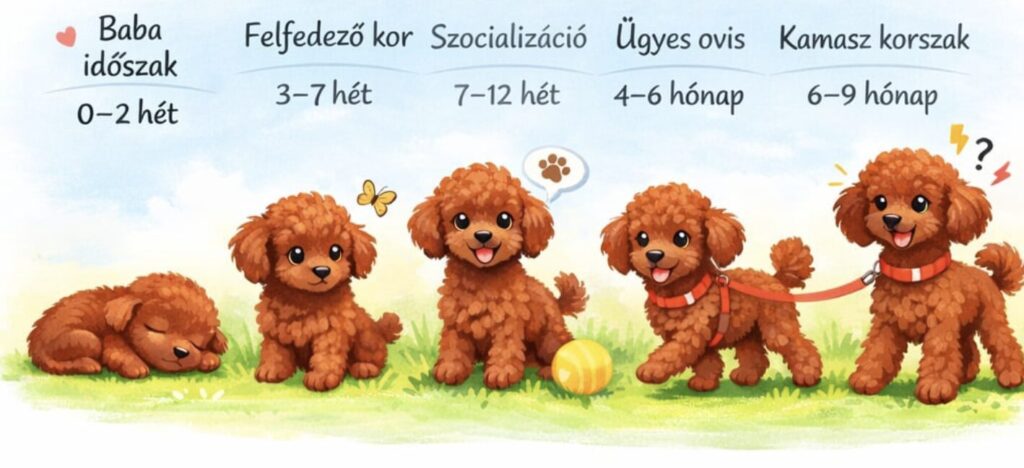
ENG👇 🇭🇺Milyen fejlődési szakaszokon megy keresztül egy törpe uszkár kölyök? 🐩 Sokan azt hiszik, hogy egy kiskutya „már mindent ért”, pedig ő is lépésről lépésre fejlődik 💛 Az első hetekben még teljesen baba: sokat alszik, az anyukájára támaszkodik, és a kis világa főleg az evésből, növekedésből és biztonságból áll. Kb. 3–7 hetes korban kezd igazán kinyílni számára a világ 🌍Jön a játék, a felfedezés, az első tanulások, és ilyenkor kezdi megérteni a kutyás kommunikáció alapjait is. 7–12 hetes kor között különösen nyitott az új élményekre, ezért ez az egyik legfontosabb időszak a szocializációban.Ugyanakkor ilyenkor még teljesen normális, ha:🐾 nem mindig figyel🐾 könnyen elfárad🐾 egyik nap bátrabb, másik nap bizonytalanabb🐾 még nem teljesen szobatiszta Ez nem „rosszaság”, hanem életkori sajátosság 😊Ahogy egy kisgyermektől sem várjuk el, hogy mindig mindent tökéletesen csináljon, úgy egy kölyökkutyától sem. 4–6 hónaposan már sokkal ügyesebb, okosabb és energikusabb lesz 🧠⚡Ilyenkor nagyon gyorsan tanul, de még mindig kölyök. Leegyszerűsítve olyan, mintha egy ovis kisgyermek szintjén lenne: rengeteget ért, kíváncsi, lelkes, de még nem tud mindig uralkodni magán. 6–9 hónapos korban jön a „kamasz korszak” 😄Több önállóság, több kíváncsiság, néha több makacsság. Ilyenkor sok gazdi megijed, hogy „pedig ezt már tudta!” , pedig ez teljesen normális fejlődési szakasz. A törpe uszkár kis testű fajta, ezért fizikailag hamarabb fejlődik, de fejben és érzelmileg még jó ideig alakul ❤️Ezért a legfontosabb minden szakaszban: türelem, szeretet, következetesség és sok pozitív élmény. Nem kell megijedni, ha a kölyök még nem tökéletes.Nem is kell annak lennie, hiszen még csak most tanulja, hogyan legyen belőle magabiztos, kiegyensúlyozott kis kutyus 🐾 ——————————————————– 🇬🇧What developmental stages does a poodle puppy go through? 🐩 Many people think that a puppy “already understands everything,” but they also develop step by step 💛 During the first weeks, they are still very much like a baby: they sleep a lot, rely on their mother, and their little world mainly revolves around eating, growing, and feeling safe. At around 3–7 weeks of age, the world really starts to open up for them 🌍This is when play, exploration, and first learning experiences begin, and they also start to understand the basics of dog communication. Between 7–12 weeks, they are especially open to new experiences, which is why this is one of the most important periods for socialization.At the same time, it is still completely normal if they:🐾 do not always pay attention🐾 get tired easily🐾 are braver one day and more uncertain the next🐾 are not fully house-trained yet This is not “bad behavior,” but simply a natural part of their age and development 😊Just as we would not expect a small child to do everything perfectly all the time, we should not expect that from a puppy either. At 4–6 months, they become much more skillful, clever, and energetic 🧠⚡They learn very quickly at this stage, but they are still puppies. In simple terms, it is a bit like the level of a preschool child: they understand a lot, they are curious and enthusiastic, but they still cannot always control themselves. At 6–9 months, the “teenage phase” begins 😄More independence, more curiosity, and sometimes more stubbornness. This is often when owners get worried and say, “But they already knew this!” — when in fact, this is a completely normal developmental stage. The toy poodle is a small breed, so they develop physically faster, but mentally and emotionally they are still maturing for quite a while ❤️That is why the most important things in every stage are: patience, love, consistency, and lots of positive experiences. There is no need to worry if your puppy is not perfect yet.They do not need to be — they are only just learning how to become a confident, balanced little dog
CHECKLIST FOR FUTURE DOG OWNERS
Scroll for HUN. Not sure whether you’re ready to welcome a puppy into your life? This little list will help you think it through I understand that welcoming a puppy is a big change in the family’s life and requires lots of care, attention, and patience. I accept that in the first months, a puppy can be a mini raptor (chewing on anything it can reach: slippers, socks, sometimes even my nerves). I’m prepared for the fact that house training can be inconsistent at first, and that this is completely normal. I can be patient and teach consistently. I accept that my current daily routine will be turned upside down, and I’m ready to create new habits — no longer alone, but together with a dog I know that as a dog owner, I have responsibilities: vaccinations, vet visits, quality nutrition, training, and proper care — and I’m able to commit to all of these. I’m ready to take care of my dog not only when it’s cute, but also when I’m tired, in a hurry, or having a bad day. And finally… I’m ready to be unconditionally loved by a little ball of fluff, to be greeted with joy every day, and to receive one of the greatest gifts of my life. _______________________________________________________________________________________________________________ If you nodded “yes” to most of these points, you might already be a dog owner at heart… you just haven’t found your puppy yet. If you have questions, feel unsure, or want to make a responsible decision, we’re happy to help. CHECKLIST LEENDŐ GAZDIKNAK Nem tudod eldönteni, készen állsz-e egy kiskutyus befogadására? Ez a kis lista segít átgondolni Tudomásul veszem, hogy egy kutyus érkezése nagy változás a család életében, és sok-sok törődést, figyelmet és türelmet igényel. Elfogadom, hogy az első hónapokban a kiskutya lehet egy mini raptor (megrágja, amit ér. papucsot, zoknit, néha az idegeimet is). Felkészültem rá, hogy a szobatisztaság eleinte hullámzó, és ez teljesen normális. Tudok türelmes lenni és következetesen tanítani. Elfogadom, hogy az eddigi napi rutinom felborul, és készen állok arra, hogy új szokásokat alakítsak ki, már nem egyedül, hanem egy kutyussal együtt Tudom, hogy gazdiként felelősségem van: oltások, állatorvosi látogatások, minőségi táplálás, nevelés, gondoskodás és ezeket be is tudom tartani. És végül… Készen állok arra, hogy nem csak akkor foglalkozom vele, amikor cuki, hanem akkor is, amikor fáradt vagyok, sietek, vagy épp rossz napom van. _______________________________________________________________________________________________________________ Ha a legtöbb pontra igennel bólogattál, lehet, hogy már most is gazdi vagy… csak még nincs meg a kiskutyád. Ha kérdésed van, bizonytalan vagy, vagy szeretnél felelősen dönteni, mi szívesen segítünk.